Skip to content

For businesses shipping documents, catalogs, stationery, and other flat items, packaging affects more than appearance. It influences how easily staff can pack an order, how well the contents arrive, and how customers feel when they open the delivery.
A cardboard envelope may seem like a simple purchase. But the wrong size, insufficient stiffness, or an unreliable closure can create extra work and disappointing results.
Here are the common concerns buyers face—and what to check before placing an order.
1.The Size Looked Right, but Our Products Did Not Fit
One frustrating purchasing experience is receiving envelopes that match the listed dimensions but cannot comfortably hold the intended contents.
This can happen when external dimensions are mistaken for usable internal dimensions, or when the thickness of a booklet or catalog is overlooked. A tight fit can slow packing, damage corners, or prevent the flap from closing properly.
What helps:
Confirm the usable internal dimensions and test a sample with the actual contents. For quotation requests, state the envelope body size and flap length separately.
The goal is a comfortable fit that allows easy insertion and secure closure.
2.We Need Our Documents to Arrive Looking Professional
A bent certificate, creased brochure, or damaged presentation folder can leave a poor impression—even when the contents are still usable.
For sellers, this may mean a complaint, replacement shipment, or additional customer service work. For the recipient, it can make the entire purchase feel less carefully handled.
Cardboard envelopes provide more support than ordinary paper envelopes, but performance depends on the board and construction. A higher gsm figure alone does not guarantee the stiffness needed for every application.
What helps:
Tell your supplier what you are sending, including its size, thickness, and weight. Evaluate the envelope with the contents inside. Bend-sensitive items may need an additional stiffener or a different packaging format.
3.Packing Takes Too Much Time
During busy periods, small packing difficulties add up. Envelopes that are difficult to load or require extra sealing tape can interrupt the workflow.
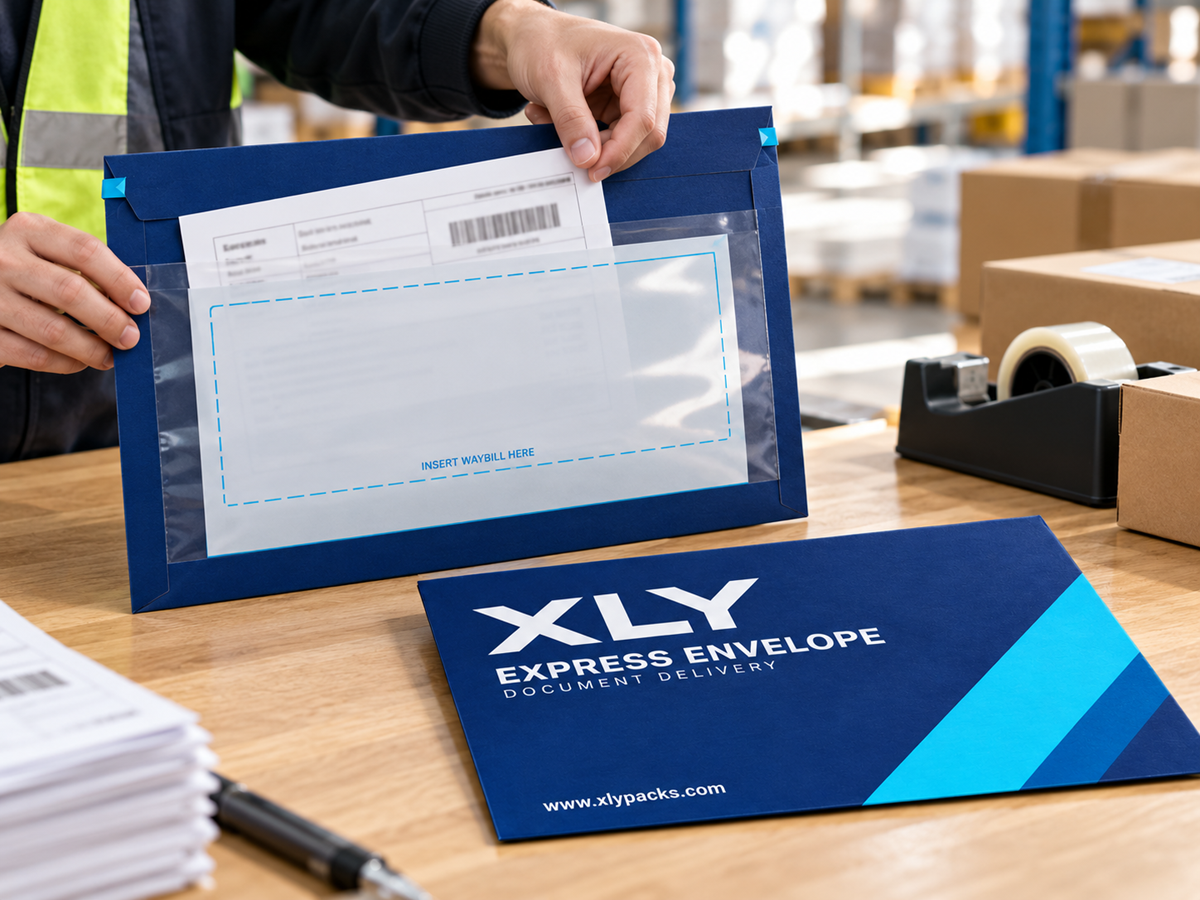
A suitable opening size and a convenient peel-and-seal flap can help staff prepare orders more smoothly.
What helps:
Include the packing team in sample testing. Check whether the contents slide in easily, the release liner removes cleanly, and the flap seals without repeated adjustment.
The best choice should work well at the packing table as well as in a product photo.
4.We Worry About the Flap Opening During Delivery
An unreliable closure creates uncertainty for both the sender and the recipient. Staff may add tape to every envelope, increasing material use and packing time.
Closure performance can be affected by the adhesive, board surface, storage conditions, and how fully the envelope is packed.
What helps:
Test the closure on a filled sample and follow the supplier’s storage and sealing guidance. Avoid overfilling, and confirm that the flap has enough contact area to close properly.
5.The Printed Result Did Not Match Our Expectations
Custom printing helps turn a plain mailing envelope into part of a brand’s presentation. However, unclear artwork instructions can lead to problems with logo placement, orientation, or color expectations.
An attractive design can also become less practical if there is no clear space for the shipping label.
What helps:
Approve an artwork proof showing the envelope dimensions, flap position, printing direction, and label area. Discuss color requirements and the available proofing options before production.
A useful design should support both branding and everyday shipping.
6.Customers Should Be Able to Open It Easily
The delivery experience continues after the package arrives. An envelope that is difficult to open can frustrate the recipient or put the contents at risk when scissors are used.
An optional easy-open tear strip can make opening more convenient, provided its position and performance suit the envelope design.
What helps:
Test the complete opening process with the actual contents inside. Check whether the opening feature is easy to find and whether the contents can be removed comfortably.
7.We Need Consistency When We Reorder
A good first sample is only part of the purchasing experience. Buyers also need repeat orders to match the approved specification.
Changes in dimensions, board, printing, or closure details can disrupt packing routines and affect presentation.
What helps:
Keep a clear approved specification covering:
- Usable internal dimensions and flap length
- Board type and grammage
- Closure and opening features
- Printing artwork and color requirements
- Packing quantity per carton
- Agreed tolerances and inspection requirements
Keeping an approved sample provides a useful reference for future orders.
A Better Purchase Starts with Clear Requirements
The lowest unit price does not always result in the lowest overall packing cost. Extra tape, slow packing, damaged contents, and replacement deliveries can all affect the value of a purchase.
Before ordering cardboard envelopes in bulk, ask:
- Does the actual product fit comfortably?
- Is the envelope suitable for the contents and delivery conditions?
- Can our team pack it efficiently?
- Does the closure work reliably in our trial?
- Will the recipient find it convenient to open?
- Are the specifications clear enough for repeat orders?
Discuss Your Cardboard Envelope Requirements with XINLIANGYU
At XINLIANGYU, we help B2B buyers discuss cardboard envelope options around their actual mailing needs.
Share the dimensions and weight of your contents, order quantity, and printing requirements. Photos of the items or your current packaging can also help communicate the fit and presentation you need.
Contact us to discuss material options, customization, and sample availability for your next project.